
The American Cancer Society estimates
approximately 14,480 new cases of invasive cervical cancer
will be diagnosed in the United States for 2021.
When detected at its earliest stage, cervical cancer has a
5-year relative survival rate is approximately 90%.
When Should You Start Screening?
Regular screening can help detect cervical cancer and precancerous cells that may one day develop into cervical cancer. The American Cancer Society encourages women to begin cervical cancer screening at age 21, which includes:
- Pap test every 3 years for women 21-29 years of age. HPV testing is not recommended unless there are abnormal Pap results.
- Pap test and HPV test (co-testing) every 5 years for women 30-65 years of age. It also is acceptable to have a Pap test alone every 3 years.
- Women age 65 or older who have had regular screening within the last 10 years and no serious pre-cancers within the last 20 years no longer need to be screened.
- Women who have had a total hysterectomy do not need screenings unless the surgery was performed as a treatment for cervical pre-cancer or cancer.
Cervical Cancer Screening Options
Pap Test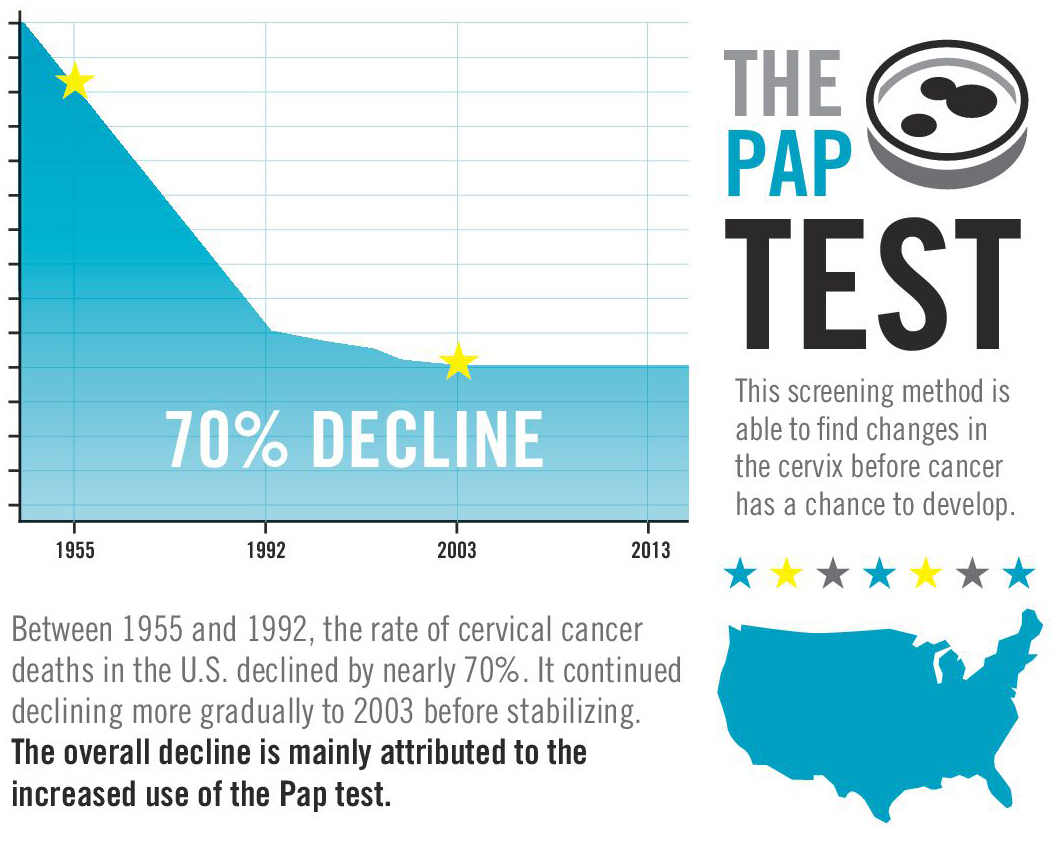
A Pap test (sometimes called Pap smear or cervical smear) is
commonly used to screen for cervical cancer.
Pap tests (which may be combined with a test for human papillomavirus or HPV) can find abnormal cells or cervical cancer. They can also help find cancer early when treatment is more likely to be effective.
The Pap test is not painful for most women. During a pelvic exam,
a piece of cotton, a brush, or a small wooden stick is gently used to scrape cells from the cervix and vagina. The cells are then viewed under a microscope to find out ifthey are abnormal. Typically, abnormal cells found by a Pap test are not cancerous. The same sample of cells may also be tested for HPV infection.
Where to Get Screened in Minnesota

Schedule an appointment with your primary care physician or gynecologist.
Treatment Options for Cervical Cancer

Minnesota Oncology is the Twin Cities’ largest and most experienced cancer and blood disorder treatment provider. Our patients have access to a team of experienced cancer specialists, evidence-based treatment paths, 12 close-to-home locations, and comprehensive services to support the whole person. New patient consultations are available within 48 hours of your request. No referral necessary.
Sources:
- American Cancer Society, https://www.cancer.org/cancer/cervical-cancer/about/key-statistics.html
- Center for Disease Control and Prevention